
Can You Cheat on an Online Aptitude Test? Everything You Need to Know (2026)
A complete breakdown of how SHL TalentCentral detects cheating, why every common method fails, the real consequences, and the only approach that actually works.
Can You Cheat on an Online Aptitude Test?
This is one of the most searched questions by candidates facing SHL tests — and the answer is clear: not meaningfully, and the attempt is almost always detectable and self-defeating.
Modern aptitude test platforms — SHL TalentCentral in particular — are specifically engineered to detect cheating through multiple simultaneous mechanisms. Attempts that worked in earlier online testing eras have been systematically closed off. As of 2026, the detection toolkit includes browser monitoring, screen activity logging, AI-powered proctoring, and in-person re-sit verification that definitively exposes any score inflation from the online test.
Even setting aside the ethical dimension: the expected payoff of cheating is near zero (detection is likely, and in-person re-sits expose the fraud regardless), while the expected cost is severe (immediate disqualification, blacklisting, possible reputational damage). Preparation is both the right thing to do and the strategically correct choice.
Methods People Try — and Why They Fail
Searching for SHL answers online Doesn't work
SHL maintains dynamic question banks containing thousands of questions. The specific questions you receive are drawn randomly and are highly unlikely to match any publicly shared set. Additionally, SHL regularly updates its question banks and marks shared questions as compromised. Even if you found questions that matched, you'd have no way to confirm the match in real time under a ticking clock.
Paying someone else to sit the test Caught at re-sit
This is the most comprehensively caught method. In-person re-sits at assessment centres — standard practice at virtually every major employer — immediately expose performance discrepancies. A significant difference between your online score and your in-person result triggers an integrity review. Additionally, face detection during the online test itself flags if someone other than the registered candidate is visible on webcam.
Using ChatGPT, Gemini, or other AI tools Detected in real time
Tab switching is logged with timestamp precision. Copy-pasting question text is detected via clipboard monitoring. Both actions are visible to employers in the proctoring report and are strong signals of AI tool use. Even if you were fast enough to extract an answer from an AI within your per-question time budget, the proctoring log would show the pattern — and AI tools perform inconsistently on the specific question formats used in SHL tests.
Using notes or reference materials Format makes it ineffective
Under time pressure of ~45–90 seconds per question, the overhead of finding the right reference in physical notes is simply too high to be useful. The cognitive cost of switching attention context also degrades performance. Candidates who try this consistently report it slows them down and increases anxiety rather than helping.
Taking the test in a group ("having help") Multiple detections apply
Face detection detects multiple people in the frame. Unusually fast and accurate answer patterns (high speed + high accuracy across many consecutive questions) trigger statistical anomaly flags. Multiple-person collaboration in the room also typically makes noise and generates distractions that degrade performance inconsistently.
How SHL Detects Cheating
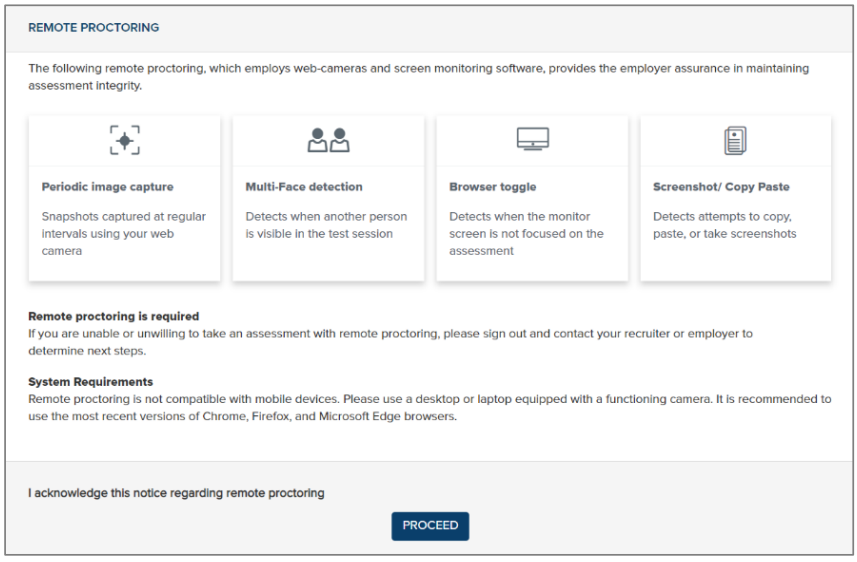
SHL TalentCentral incorporates a built-in remote proctoring system that runs automatically during every test session. The following mechanisms are confirmed and active as of 2026:
Browser Focus Detection
Every time you switch away from the test window — to another tab, application, or desktop — this is logged with a timestamp. The total number of focus losses and their timing are visible to the employer.
Copy-Paste Monitoring
Any clipboard activity during the test — copying text from the question, pasting content into the test — is detected. This specifically flags attempts to paste questions into AI tools.
Screenshot Detection
Print Screen, screen recording software, and screen capture attempts are detected and logged. This prevents candidates from screenshotting questions for later analysis or sharing.
Periodic Screen Captures
At random intervals, TalentCentral captures what is displayed on your screen. Employers can review these screenshots as part of the proctoring report — showing what you had open during the test.
Face Detection (Webcam)
Where webcam proctoring is enabled, AI-powered face detection flags: absence of the test-taker from frame, presence of additional people, gaze direction anomalies (consistently looking away from screen), and device substitution.
Statistical Anomaly Detection
Answer patterns that are statistically improbable — unusually consistent speed + accuracy combinations, answer patterns that don't match natural human response variability — are algorithmically flagged for manual review.
What Employers Actually See
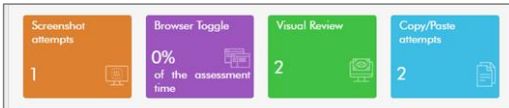
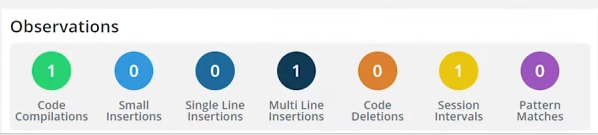
When a recruiter opens your SHL TalentCentral report, they see not just your scores but a complete integrity summary alongside them. The proctoring dashboard clearly shows:
| Integrity Flag | What It Shows | What It Suggests |
|---|---|---|
| Focus loss count | Number of times browser focus left the test window | Tab switching for AI tool assistance |
| Copy-paste events | Clipboard activity log with timestamps | Copying questions to external tools |
| Multi-line paste detected | Large blocks of text pasted into answer fields | AI-generated responses being inserted |
| Screenshot attempts | Print screen events logged with timestamps | Photographing questions for assistance |
| Face detection anomalies | Multiple faces, absent face, gaze direction | Third-party assistance, test substitution |
| Screen capture thumbnails | Random screenshots from test session | Direct visual evidence of open applications |
You don't need to cheat extensively for it to show up. A single copy-paste event, one screenshot attempt, or two focus losses in quick succession creates a visible flag in the report. For context: normal test-taking typically produces zero such events. Even accidental tab switching (you briefly checked the test instructions in another tab) shows up and requires explanation.
The In-Person Re-Sit: The Definitive Catch
Even if someone believed they had evaded all online detection mechanisms, there is a final safeguard that makes cheating on online aptitude tests a strategy guaranteed to fail: the in-person supervised re-sit.
Virtually all major employers — investment banks, Big Four firms, large consulting firms, defence forces, aviation companies — require shortlisted candidates to re-sit the same aptitude tests in person at their assessment centre, under supervised conditions with no access to any external resources.
The in-person test uses a different question set but the same format and difficulty calibration. If your online score was inflated through assistance, the in-person score will be significantly lower — producing a discrepancy that immediately triggers an integrity review.
A substantial gap between your online percentile and your in-person percentile is not attributed to nerves — it is treated as evidence of online test integrity compromise. The practical consequence is immediate disqualification from the current process and, in many cases, a permanent flag on the TalentCentral platform that follows you to future applications at any SHL-using employer.
Consequences of Getting Caught
Immediate disqualification from the current process
The moment an integrity flag is investigated and confirmed, your application is terminated with no appeal. The employer does not proceed to any further stage.
Blacklisting from the employer
Many major employers maintain blacklists of candidates flagged for integrity violations. This prevents reapplication in future years — the disqualification is permanent, not just for the current intake cycle.
TalentCentral platform flag
SHL's TalentCentral platform shares integrity data across employers in some configurations. A flag on one employer's test can follow you to future applications with other SHL-using employers.
Post-hire termination if discovered later
If a discrepancy is discovered after a job offer has been made — or even after employment has started — it constitutes grounds for immediate dismissal and potential breach of contract claims.
What to Do Instead: The Only Approach That Works
The only approach that produces a good score on an online aptitude test and holds up under an in-person re-sit is genuine preparation. The good news: SHL test performance is directly and meaningfully improvable through structured practice. Candidates who prepare consistently outscore unprepared candidates by 5–15 percentile points on average.
- ✓Take a baseline test first. Identify your weakest test type. Focus your preparation effort there — not on areas where you're already strong.
- ✓Practise under timed conditions from day one. Format familiarity under time pressure is what produces real score gains. Use our free timed practice tests.
- ✓Review every incorrect answer. Understanding why you got something wrong prevents the same error recurring. This is the highest-leverage activity in test preparation.
- ✓Follow the 3-week preparation plan. See our full preparation guide for a structured week-by-week approach that produces consistent improvement.
Frequently Asked Questions
Ready to Pass Without Cheating?
Prepare properly with our free practice tests — the only approach that produces a score that holds up under in-person re-sit verification.