
What is an Aptitude Test? Complete Guide & Examples (2026)
Everything you need to know — definitions, all test types with worked examples, how scoring works, which companies use them, and how to prepare effectively.
What is an Aptitude Test?
An aptitude test is a standardised, psychometrically designed assessment used by employers, universities, and training institutions to measure a person's cognitive abilities, problem-solving skills, and job-related competencies. Unlike a knowledge test — which assesses what you already know — an aptitude test measures your capacity to learn, reason, and perform under conditions that mirror real work demands.
The term "aptitude test" is often used interchangeably with cognitive ability test, reasoning test, or psychometric test. In practice, aptitude tests sit within the broader category of psychometric assessments, which also includes personality questionnaires and situational judgement tests.
An aptitude test is a short, timed, standardised assessment designed to measure inherent cognitive ability — how quickly and accurately you can process information, reason logically, and draw correct conclusions. There are usually right and wrong answers, and your performance is compared against a norm group.
What Aptitude Tests Measure
| Cognitive Skill | What It Means | Test Type |
|---|---|---|
| Numerical reasoning | Ability to interpret and calculate with numerical data, tables, and graphs | Numerical Reasoning |
| Verbal comprehension | Ability to read, understand, and critically evaluate written information | Verbal Reasoning |
| Fluid intelligence | Ability to identify patterns and solve novel problems without prior knowledge | Inductive / Abstract Reasoning |
| Deductive logic | Ability to apply rules to reach certain conclusions | Deductive Reasoning |
| Mechanical understanding | Ability to apply physical and mechanical principles | Mechanical Reasoning |
| Situational judgement | Ability to select appropriate responses to workplace scenarios | Situational Judgement (SJT) |
Aptitude Test vs Psychometric Test — What's the Difference?
All aptitude tests are psychometric tests, but not all psychometric tests are aptitude tests. The psychometric umbrella also covers personality questionnaires (like the SHL OPQ32) which have no right or wrong answers and measure behavioural tendencies rather than cognitive ability. When employers say "psychometric test," they usually mean a combination of both.
Why Employers Use Aptitude Tests
1. Objective, Bias-Reduced Screening
CVs and unstructured interviews are vulnerable to unconscious bias — interviewers may favour candidates who share their background or communication style. A standardised aptitude test applies identical conditions to every candidate and produces comparable, numerical scores that are harder to manipulate consciously or unconsciously. This is why many diversity and inclusion initiatives actively advocate for ability testing early in the recruitment funnel.
2. Efficient Large-Scale Filtering
Popular graduate schemes may attract 10,000–30,000 applications for a few hundred positions. It is operationally impossible to interview every applicant. An online aptitude test administered at volume can narrow that pool to the most capable candidates in hours, allowing human effort — interviews, assessment centres — to focus where it adds the most value.
3. Predictive Validity
Decades of academic research show that general cognitive ability is one of the strongest single predictors of job performance across industries and role levels. A landmark meta-analysis by Schmidt & Hunter (1998) found cognitive ability tests had a validity coefficient of 0.51, versus 0.38 for structured interviews and just 0.18 for years of experience. Put simply: how well you score on an aptitude test is a genuinely useful predictor of how well you'll do the job.
How Aptitude Tests Fit Into the Hiring Process
| Hiring Stage | Typical Assessment | Purpose |
|---|---|---|
| Initial application screening | Short SJT or cognitive screener | High-volume filter |
| Online assessment stage | Full numerical, verbal, and logical test battery | Cognitive ability benchmark |
| Assessment centre | Supervised re-sit + personality questionnaire | Verify online results; deeper profiling |
| Final interview | Score-based competency questions | Contextualise test data with judgment |
Most employers require shortlisted candidates to re-sit aptitude tests at an assessment centre under supervision. If your in-person score differs significantly from your online score, it raises an integrity flag. Always take your online test as seriously as you would an in-person exam.
Types of Aptitude Tests
Below are all the major aptitude test types you are likely to encounter in recruitment. Click the links to access our dedicated guides with full practice questions for each.
Which Test Will You Face? (By Role)
| Role / Sector | Most Common Tests |
|---|---|
| Finance, Banking, Investment | Numerical reasoning, Verbal reasoning, Inductive reasoning |
| Consulting (Big Four, Strategy) | Numerical + Verbal + Deductive (SHL Verify G+) |
| Law, Civil Service | Verbal reasoning, Watson Glaser critical thinking, SJT |
| Engineering, Technical | Mechanical reasoning, Numerical, Spatial reasoning |
| Technology / IT | Deductive / logical reasoning, Numerical, Abstract |
| Graduate schemes (general) | Numerical + Verbal + Inductive — the "core three" |
| Healthcare / NHS | SJT, Verbal reasoning, Numerical reasoning |
Worked Example Questions
Below are fully worked example questions across six test types — with detailed explanations of how to reach the correct answer efficiently.
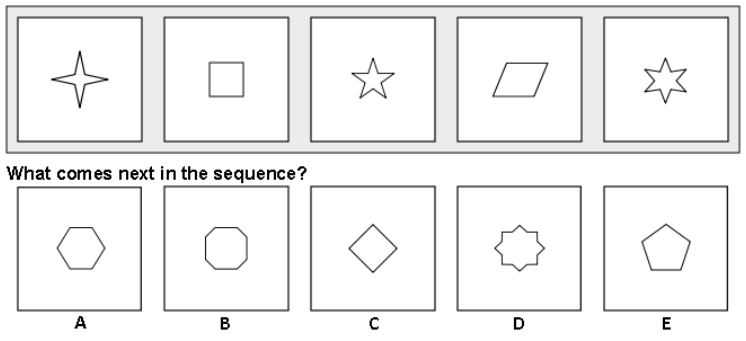
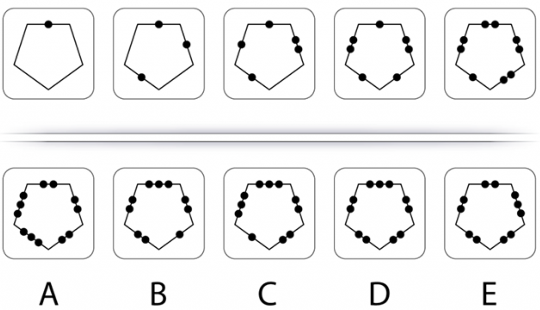
Our free practice tests include full timed sessions for every test type above, with detailed answer explanations for every question.
How Aptitude Tests Are Scored
Aptitude tests are almost never scored in isolation. Your raw score — the number of questions you answered correctly — is converted into a percentile rank by comparing your performance against a norm group: typically people at a similar career level or in similar roles.
Norm-Referenced Scoring Explained
| Percentile | What It Means | Typical Employer View |
|---|---|---|
| 90th+ | You outperformed 90% of the comparison group | Strong pass; likely to progress |
| 70th–89th | Above average performance | Pass; competitive but not top-tier |
| 50th–69th | Average relative to norm group | Borderline; depends on role and employer |
| Below 50th | Below average vs. norm group | Often filtered at screening stage |
A competitive investment bank might set a cut score at the 80th percentile. A logistics company might pass candidates from the 40th. The norm group also matters: graduate-level norms are significantly harder than general population norms. Employers rarely disclose their exact thresholds — aim to maximise your score rather than meet a target.
Does Leaving Questions Blank Hurt Your Score?
The vast majority of aptitude tests do not apply a penalty for incorrect answers. An unanswered question scores zero, but a guess has a 20–25% chance of being correct. Always submit an answer for every question — never leave anything blank. The only exception is a small number of tests (notably some civil service exams) that explicitly state a penalty for wrong answers — in that case, only guess when you can eliminate at least two options.
Which Companies Use Aptitude Tests?
Aptitude tests are used across virtually every major sector for graduate and professional hiring. The following organisations are among the most prominent users — most administer tests via SHL TalentCentral, though some use Korn Ferry, Saville, Talent Q, or their own platforms.
Financial Services & Consulting
Technology & Engineering
Consumer, Retail & Other
For a full breakdown of which tests each company uses, see our company-by-company test guide.
How to Prepare for an Aptitude Test
Research shows that structured practice produces meaningful score improvements — on average around 5–15 percentile points for candidates who prepare seriously over 1–2 weeks. The key is not just doing more questions, but doing the right kind of preparation.
Identify the test type and provider
Check your invitation email for the platform name (SHL TalentCentral, Korn Ferry, Saville, etc.) and the specific tests included. Targeted preparation is far more effective than generic practice. See our ultimate guide for a full breakdown of providers.
Take a baseline test first
Before studying anything, complete one full timed practice test under real conditions. Record your score and identify which question types caused the most errors. This is your starting point and dictates where to focus.
Practice free aptitude tests under timed conditions
Use our free practice tests to simulate real test conditions. Always set a timer — most errors in actual tests come from running out of time, not lack of ability. Phone in another room; no distractions.
Review every incorrect answer — understand the why
Spending as much time reviewing wrong answers as taking the test itself is one of the highest-leverage preparation habits. Understanding why an answer was wrong prevents the same error recurring. Completing tests without reviewing is the most common preparation mistake.
Build numerical and verbal foundations
For numerical tests: brush up on percentage change, ratios, and fraction-to-decimal conversions. These cover roughly 80% of question types. For verbal tests: practice reading dense analytical passages and applying the True/False/Cannot Say framework strictly to the text.
Do not rely on AI tools during the test
Modern test platforms including SHL TalentCentral detect tab switching, copy-paste activity, and screen capture. Using AI tools like ChatGPT during a live test is detectable and violates the test terms. Prepare properly beforehand — your practice investment is what actually raises your score. See our guide on whether you can cheat on an SHL test.
Frequently Asked Questions
Ready to Start Practising?
Access our free aptitude practice tests — numerical, verbal, inductive, and deductive — with full worked explanations for every question.